If you sell aerosols, alcohol-based cleaners, lithium batteries, nail polish, perfume, lighter fluid, certain supplements, or any of the dozens of everyday products the Department of Transportation classifies as hazardous, you already know fulfillment options narrow fast. Most 3PLs either refuse hazmat outright or quietly ship it incorrectly until a carrier audit catches them. Neither outcome is good for your brand.
We’ve been handling hazmat at Pacific Prep for years, and over the last several months we’ve seen a real uptick in brands moving these SKUs to us, often after a previous prep center told them the products were “too complicated” or after Amazon flagged a listing for incorrect dangerous goods documentation. If that sounds familiar, this post is for you.
What Actually Counts as Hazmat in Ecommerce
A lot of sellers don’t realize their products are regulated. The categories that trip people up most often:
Personal care and beauty products with flammable propellants or solvents, including dry shampoo, hairspray, perfume, nail polish, nail polish remover, and self-tanning sprays. Cleaning products with alcohol, bleach, ammonia, or pressurized contents. Lithium-ion and lithium-metal batteries, both standalone and installed in devices. Adhesives, paints, and coatings. Magnetized materials. Certain essential oils. Lighters, matches, and camping fuels. Some supplements and pet products with regulated ingredients.
If your product has a flash point, a pressurized container, a battery, or a UN number printed anywhere on the packaging, it’s almost certainly subject to hazmat rules under 49 CFR.
Why Hazmat Fulfillment Is Genuinely Different
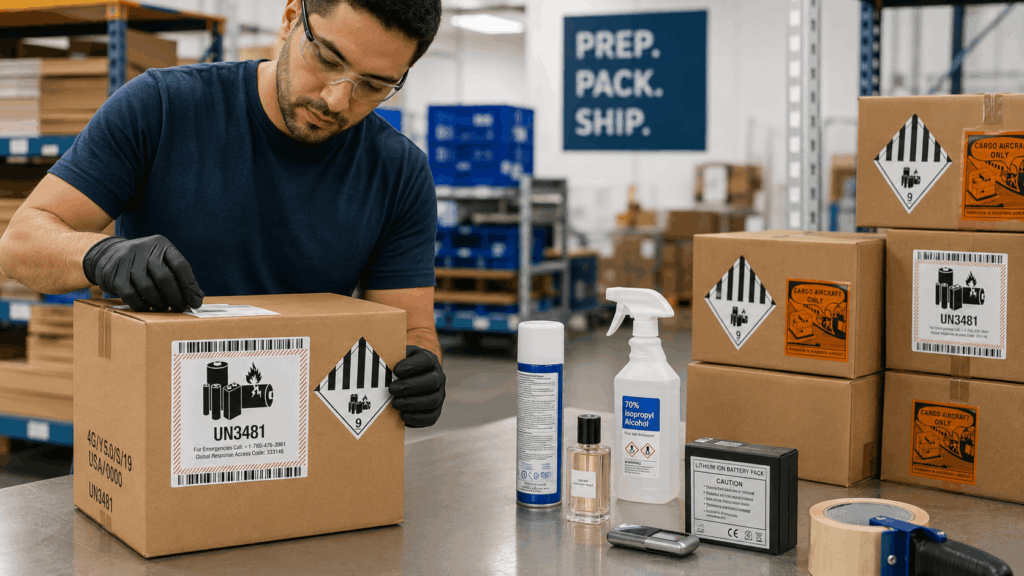
Standard pick-pack operations don’t translate to dangerous goods. The work involves segregated storage, trained personnel, carrier-specific approval processes, proper limited quantity and ORM-D marking where applicable, lithium battery handling protocols, and shipping paperwork that has to be exactly right. Mistakes cause delays and create risk for your account being suspended.
Amazon FBA has its own layer on top of all this. Sellers shipping hazmat into FBA need to be enrolled in Amazon’s dangerous goods program, with safety data sheets uploaded and approved before inventory can even be received. Inbound shipments need correct labeling, and pallet builds have to follow specific segregation rules. We handle this prep work for clients regularly, so the SDS submission, labeling, and inbound documentation are all squared away before product leaves Hillsboro.
What We Do at Pacific Prep
Our hazmat capabilities cover the categories most ecommerce brands need:
We store and ship limited quantity products for ground transport, including the consumer commodity category that covers a huge percentage of beauty and household goods. We handle lithium battery shipments under the current PI 965 through 970 guidance, including products with batteries installed, packed with, or shipped alone. We prep dangerous goods inbound shipments to Amazon FBA with the labeling and documentation Amazon’s program requires. We support DTC ground shipping through approved carriers, with the markings, orientation labels, and shipping papers handled correctly on every order.
Our turnaround is the same as the rest of our operation. Orders in by 12 pm ship that day, orders after 12 pm ship the next business day. Hazmat doesn’t mean slow.
Why the Demand Is Growing
A few things are happening at once. More indie beauty and personal care brands are scaling into the size where they need a real 3PL, and a lot of those products are regulated. Amazon has tightened enforcement on dangerous goods compliance, which has surfaced problems for sellers who didn’t realize they had any. Lithium battery rules keep evolving, and brands selling consumer electronics, vape hardware, kids’ toys with batteries, and rechargeable anything are paying closer attention. And a lot of 3PLs that used to quietly accept hazmat have stopped, either because their insurance changed or because they got burned on a carrier audit.
The net effect is a real shortage of fulfillment partners who can actually do this work properly. We can.
If You’re Evaluating Options
The honest conversation to have with any 3PL is whether they’re certified to handle your specific UN numbers and packing groups, what carriers they’re approved with for hazmat ground shipping, and whether they can prep inbound shipments for Amazon’s dangerous goods program if you sell on FBA. Those three questions will tell you very quickly who’s set up for this work and who’s improvising.
We don’t have minimums. If you want to talk through your SKUs and whether Pacific Prep is the right fit, reach out and we’ll get on a call.